

Body alignment is key for reducing stress on the body and preventing injuries. Proper body alignment refers to positioning of the bones so that muscles and joints can function efficiently and so that the body can move with ease. Proper body alignment can mitigate the risk of injury, pain, and discomfort. Proper alignment can also enhance performance for any kind of physical activity. Athletes, dancers, musicians, massage therapists, carpenters are just some of the professions that can enhance performance and reduce risk of injury with increased awareness of alignment. A body well aligned has more power, efficiency and is less prone to injury.
Habitual poor posture can cause muscles to become overloaded and increasingly tight. Other muscles will be overstretched and weak – offering little in the way of support. This can lead to further discomfort, pain, and in time, the possibility of injury. A slumped forward posture with forward rounding shoulders accompanied with forward-head posture: Tight, short muscles are pectoralis major and minor, upper trapezius, levator scapulae, scalene muscles, sternocleidomastoid. Weak muscles: middle and lower trapezius muscles, serratus anterior, and rhomboids. As the head is in a forward-head position, the deep anterior flexors of the neck are also stretched and weak. As the head pushes forward, the head also tilts up to see what is ahead (a computer screen, for example). The suboccipital muscles at the base of the head become increasingly overloaded and strained. Stretching and massage can be effective in addressing muscle tension and trigger points. Strengthening exercises are important for improving and maintaining good posture.
To effectively address muscle imbalances, it is recommended to see a physical therapist who can diagnose and tailor appropriate exercises for your specific needs. However, individuals can benefit from incorporating simple body awareness exercises into their daily routine. These exercises, when done at intervals through out the day, can be invaluable for maintaining body alignment, reducing strain on the body and relieving discomfort.
Taking breaks during the day to move and tune in can help maintain alignment. While stretch and strengthening exercises are an important part of maintaining good posture, it is beneficial to be aware of your body alignment so that you can stretch and strengthen effectively and safely.
Body Awareness Exercise 1:
Stand with your feet about hip width apart. Bring attention to your breath and begin to scan your body. Take note of your alignment and any feelings of stress or discomfort. Notice where your head is in relation to your shoulders and pelvis. Imagine dropping the pelvis down towards the floor.
Bring your attention to the soles of your feet. How do the soles of your feet feel against the floor or mat? Is there more weight on one foot or the other? or one part of the foot more than another? How does the floor feel against your feet? Shift the weight from the heels of your feet forward toward the balls of your feet, slowly back and forth. How does that affect the alignment of your head? When the weight is far back on the heels, the head, in an effort to counter-balance, will move far forward. Imagine the soles of your feet against the floor like a tripod with weight distributed between the balls of the big toe, little toe, and heel.
What occurs in the pelvis (and up and down the spine) affects head alignment. Drop the pelvis down towards the floor and open the chest and shoulders. I like to bring attention to my anterior, lateral, and posterior portions of the deltoid muscles as it helps me to become more aware of my shoulder alignment. Notice if there is any forward rounding of the shoulders, imagine the release of tension and open the shoulders and chest.
Ease your head back so that your ears come in line with your shoulders. The cheekbone should be in line with the top portion of your sternum. You can try this exercise while placing your fingertips side by side on either side of the neck. Beneath your fingertips you will be able to palpate portions of the scalene muscles and the sternocleidomastoid. As the head eases back into alignment, how do these muscles respond? Perhaps you notice other shifts in alignment such as at the base of the head, the neck, shoulders, and pelvis.
Body Awareness exercise 2: Chakra alignment
Meditation can calm mind chatter and promote clarity and balance. Meditation is often practiced to attain higher consciousness, transformation. If interested in seriously pursuing chakra meditation, It is a good idea to seek guidance from an experienced yoga and/or meditation instructor. The exercise I present here is a simple exercise I do daily to bring my body into alignment physically and energetically after (and before) hours of working on clients or at the computer. I find my body responds and naturally shifts into better alignment – relieving discomfort. Whether one believes chakras exist or not, the benefits of meditation will be experienced by bringing your attention to points of focus, such as your breath and chakras.
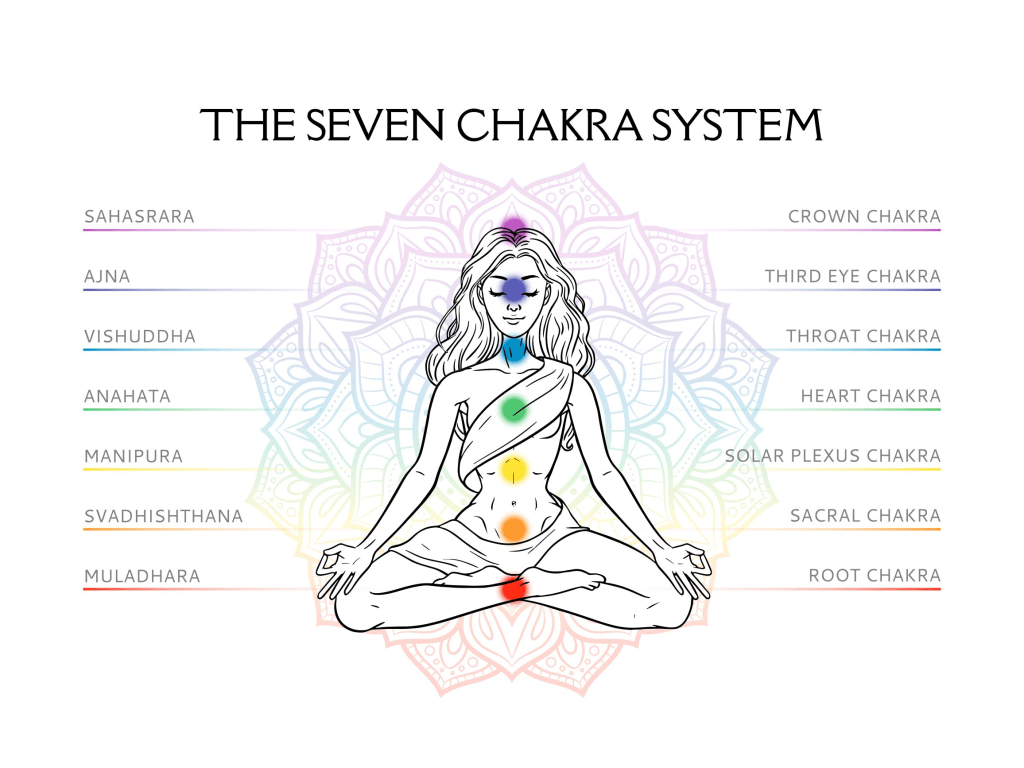
Standing with your feet hip width apart, bring your attention to your breath and do a quick body scan. As you notice misalignments here and there, take note and gently correct them. Drop the pelvis down toward the floor. Open chest and shoulders. You may notice that your head needs to settle back towards your shoulders so that the ears come in align with the shoulders. Continue to meditate, arms relaxed at your sides. With awareness on your natural breath (don’t force the breath), bring your attention to the root chakra and slowly move up to the sacral, solar plexus, heart, throat, third eye, and crown chakras. Benefits of regular meditation are:
- Promotes calm and a sense of well being
- Reduces stress and anxiety
- Research suggests meditation can improve concentration and memory
- Brings balance and mind-body integration
- enhances creativity and problem solving
- Mediation can deepen connection to one’s intuitive knowing
Proper body alignment can reduce strain on muscles, help prevent injuries, and enhance overall performance. Whether you are an athlete, musician, or someone working at a desk, taking regular breaks in the day to move and engage in meditative awareness exercises can lead to a more efficient and stress-free body. Give yourself regular self care time during the day to tune-in, explore and discover.
 Massage For Well Being