
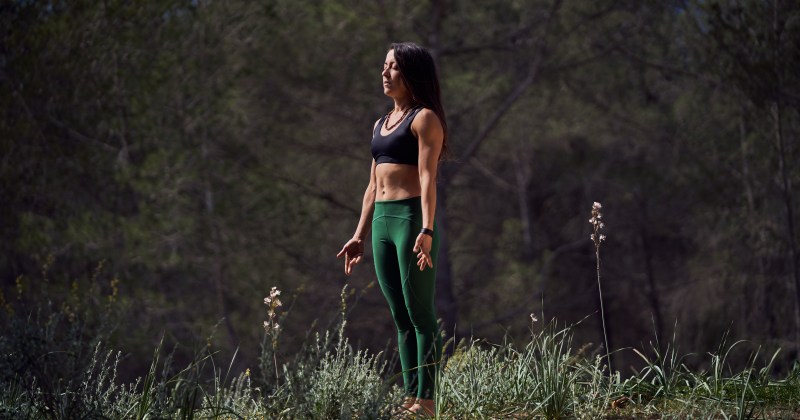

Proper body alignment can reduce the risk of injury, pain, and discomfort. It can also enhance performance for any kind of physical activity. Athletes, dancers, musicians, massage therapists, carpenters and others can benefit from increased body alignment awareness. A body well aligned has more power, efficiency and is less prone to injury.
If one’s job or hobby requires a lot of sitting during the day (driving, sitting at a desk in front of the computer, for example) it will be important to take breaks during the day to move and tune in to your body. In addition to stretch and strengthening exercises, awareness exercises can help align and increase body awareness. Improved body awareness is invaluable for any exercise program, walking, daily living.
Body Awareness Exercise:
Stand with your feet about hip width apart. Bring attention to your breath and begin to scan your body. Take note of your alignment and any feelings of stress or discomfort. Notice where your head is in relation to your shoulders and pelvis. Imagine dropping the pelvis down towards the floor.
Bring your attention to the soles of your feet. How do the soles of your feet feel against the floor or mat? Is there more weight on one foot or the other? or one part of the foot more than another? How does the floor feel against your feet? Shift the weight from the heels of your feet forward toward the balls of your feet, slowly back and forth. How does that affect the alignment of your head? When the weight is far back on the heels, the head, in an effort to to counter-balance, will move far forward. Imagine the soles of your feel against the floor like a tripod with weight distributed between the balls of the big toe, little toe, and heel.
What occurs in the pelvis (and up and down the spine) affects head alignment. Drop the pelvis down towards the floor rather than (do not place) pushing the pelvis into a posterior tilt (tucking forward and under). Notice if there is any forward rounding of the shoulders, imagine the release of tension and open the shoulders and chest.
Ease your head back so that your ears come in line with your shoulders. The cheek bone should be in line with the top portion of your sternum. You can try this exercise while placing your fingertips side by side on either side of the neck. Beneath your fingertips you will be able to palpate portions of the scalene muscles and the sternocleidomastoid muscle. As the head eases back into alignment, how does your body respond? Perhaps you experience shifts in alignment such as at the base of the head, shoulders and pelvis, soles of feet.
 Massage For Well Being